Customs Charges UK to Ireland: How Much & How to Pay [2026]
Since Brexit, UK-to-Ireland parcels face EU import duty and 23% Irish VAT. How much you'll pay, who collects it, and worked examples.
August 8, 2026
Since Brexit, the UK is a 'third country' for customs, so parcels from the UK to Ireland can face EU import duty and 23% Irish VAT. Here's how much you'll pay, who collects it, and how to avoid surprises.
Do You Pay Customs From the UK to Ireland?
Yes. Before 1 January 2021, goods moved freely between the UK and Ireland under EU single market rules — no declarations, no duties, no border checks. Brexit changed that. The UK is now a third country for customs purposes, so parcels from the UK to Ireland are treated exactly like shipments from any other non-EU country: standard EU import rules apply, including a customs declaration on arrival, possible import duty, and Irish VAT.
Whether you actually pay anything depends on what you ordered, what it's worth, and how it was shipped — not on how close the two countries are. Low-value gifts can be exempt, many products carry 0% duty, and sellers who ship DDP (Delivered Duty Paid) pay everything upfront. The rest of this guide walks through the math.
What You'll Pay: Duty + 23% Irish VAT
Two charges apply to most parcels from the UK to Ireland. The first is EU import duty, set by the EU Common Customs Tariff according to the product's HS code. Since 1 July 2026, parcels under €150 pay a flat €3 duty per item type — a temporary measure that replaced the old €150 duty exemption. Parcels over €150 pay the normal tariff rate, which for typical consumer goods lands between 0% and 12% of the customs value (the goods plus delivery to the border) — clothing is usually around 12%, while most electronics sit at 0%.
The second is Irish VAT at 23% — the standard rate — which applies to nearly all imported goods. Here's the part that catches people out: VAT isn't charged on the goods value alone. It's layered on top of the full landed cost, so you pay (goods value + delivery + duty) × 23%. A genuinely low-value gift between private individuals under €45 can escape both charges.
Worked Examples
A £60 clothing gift. Say you're sending clothing worth £60 — around €70 at illustrative exchange rates — from the UK to Ireland. The gift is under €150, so it pays the flat €3 duty per item type instead of the 12% clothing rate. The VAT base becomes €70 + €10 delivery + €3 duty = €83, and 23% VAT adds roughly €19.10. Total customs charges: about €22.10. A genuine gift between private individuals under €45 would have been exempt, but this one is above the threshold.
A £200 electronics order. Now take an electronics order worth £200 — around €233. Most electronics carry 0% duty, so there's no duty line. With €15 delivery, the VAT base is €233 + €15 = €248, and 23% VAT comes to about €57. Total customs charges: roughly €57. The duty rate is what separates the two bills — the same VAT layering applies to both.
Who Pays and How
Under DAP (Delivered at Place) — the default for most online orders —you pay as the buyer. The delivery carrier (An Post, DPD, DHL, or FedEx) clears the parcel through customs on your behalf, pays the charges upfront, and collects from you at delivery, via a payment link, or when you collect from the depot. Under DDP, the seller prepays everything at checkout and nothing is owed on arrival. For the full breakdown of who owes what under each Incoterm, see our guide on who pays customs duties.
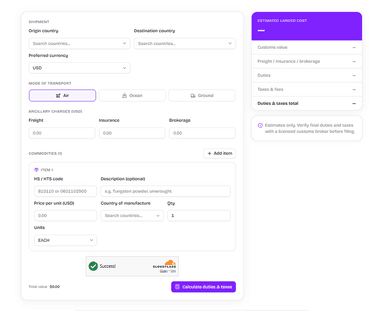
Try the free duty & tax calculator
Shipping from the UK to Ireland? Enter your product's HS code to see the exact duty and 23% VAT it will owe.
Calculate duty & tax nowFrequently Asked Questions
Do I pay customs from the UK to Ireland?
Yes — since Brexit the UK is a third country for customs, so parcels from the UK to Ireland can be charged EU import duty and 23% Irish VAT. Whether you actually pay depends on the value of the goods and the shipping terms you agreed to (DDP vs DAP).
How much are customs charges from the UK to Ireland?
EU import duty is typically 0–12% of the customs value (the goods plus delivery to the border) for parcels above €150, while parcels under €150 now pay a flat €3 duty per item type since July 2026. Irish VAT at 23% applies on the value plus duty plus delivery. Genuine gifts between private individuals under €45 remain exempt from duty.
Who collects customs charges on parcels to Ireland?
The delivery carrier (An Post, DPD, DHL, or FedEx) pays customs on your behalf and collects the charges from you at delivery or via a payment link — unless the seller shipped DDP and prepaid everything.
Related guides: Irish Customs Charges: What's Changed in 2026 · Ireland Import Duty · EU Import Duty
DDP shipping via RateTell removes surprise customs bills for your Irish customers by showing the full landed cost at checkout. Start for free and charge duty and VAT like a local.
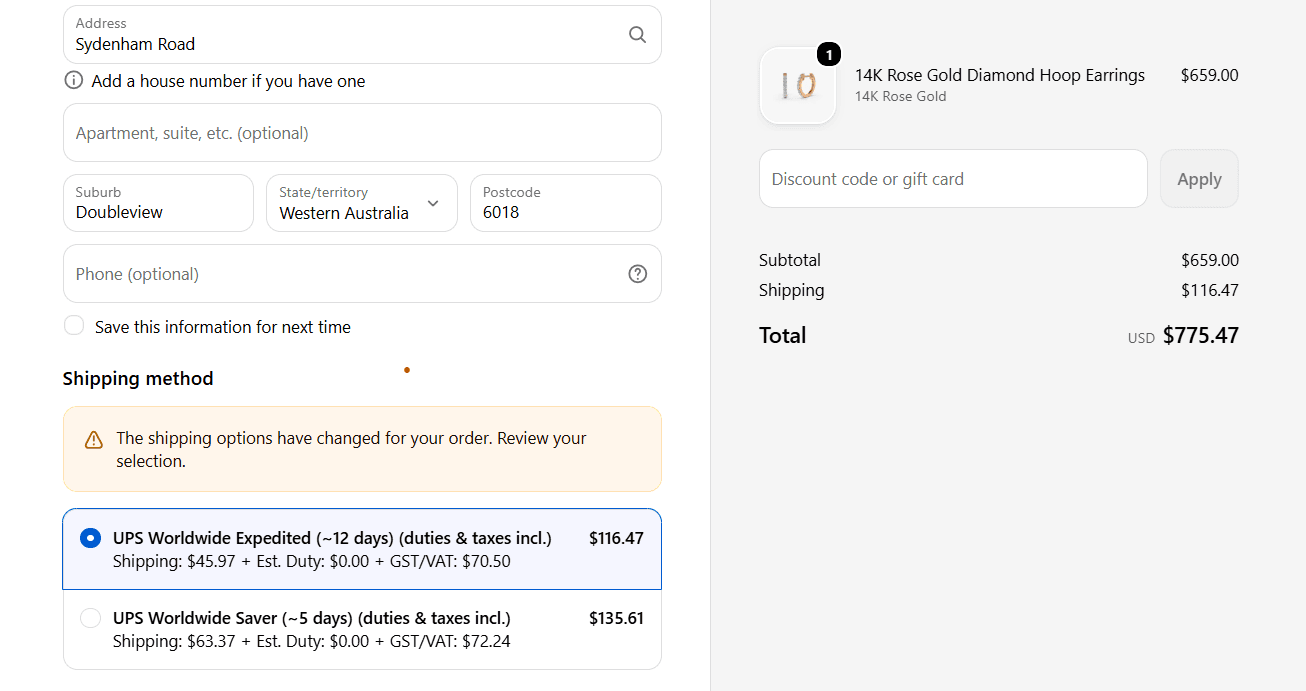
Show duties & taxes at checkout on Shopify
Selling to Irish customers? Show duty and 23% VAT at checkout so nothing is owed when the carrier arrives.
Install on ShopifyRateTell Team
RateTell helps Shopify merchants show estimated duties, taxes, and shipping at checkout. Start for free today.
Start for FreeRelated articles
Duties & Taxes
What Are Customs Charges? Duties, Taxes & Fees Explained
Customs charges explained: import duty, VAT, brokerage fees, and de minimis thresholds. Learn what you'll pay when your package arrives.
Duties & Taxes
Ireland Import Duty & VAT Rates: A 2026 Guide
Ireland import duty and VAT rates explained — EU Common Customs Tariff, 23% Irish VAT, de minimis thresholds, and worked calculations.
Duties & Taxes
How to Pay Customs Duty Online: Step-by-Step [2026]
How to pay customs duty online — via courier payment links, postal services, or CBP pay.gov. Step-by-step instructions for US, UK & EU, plus scam warnings.