FedEx Duty & Tax: How to Pay + Scam Text Warning [2026]
FedEx duty and tax charges explained: how FedEx calculates duties, how to pay online, and how to spot FedEx duty scam texts.
July 13, 2026
FedEx duty and tax are the import duties and taxes FedEx pays to customs on your behalf when a shipment clears the border, plus FedEx's own brokerage fee for handling the clearance. FedEx bills you for these — usually via a payment link, at delivery, or on the shipper's account. If you've ever received an international package via FedEx, you may have been surprised by an unexpected bill for duties and taxes — understanding how FedEx handles customs clearance, what fees you'll owe, and how to dispute incorrect charges can save you money.
This guide covers everything you need to know about FedEx taxes and duties — from how they're calculated to how to dispute them and avoid surprise charges altogether.
How FedEx Calculates Duty and Tax
When a package enters a country, the destination country's customs authority assesses import duties and taxes based on the goods inside. FedEx acts as a customs broker — they handle the paperwork, classify the goods, and pay the assessed fees to customs on the recipient's behalf.
Here's how the FedEx duty tax calculation works step by step:
- HS code classification — FedEx assigns a Harmonized System (HS) code to each item in the shipment. This code determines which duty rate applies. If the shipper provided an HS code on the commercial invoice, FedEx typically uses that; otherwise, FedEx's brokerage team classifies the goods.
- Declared value assessment — Customs officials review the commercial invoice to determine the transaction value of the goods. Undervalued invoices can trigger audits or penalties.
- Duty rate application — The destination country's tariff schedule — built on the World Customs Organization's (WCO) Harmonized System — is applied to the declared value using the assigned HS code. Rates vary by product type and origin country, and trade agreements may reduce or eliminate duties.
- VAT or GST calculation — Most countries charge value-added tax (VAT) or goods and services tax (GST) on top of the product value plus shipping plus any duty owed. This compounds the total charges.
In addition to government-assessed duties and taxes, FedEx charges its own brokerage fees. The most notable is the Advancement Fee (ADV) — a percentage of the total duties and taxes paid. FedEx charges this fee because they front the money to customs on your behalf before collecting it from the recipient. The ADV fee typically ranges from 2% to 5% of the duties and taxes advanced, with a minimum charge that varies by country.
What to Expect When FedEx Delivers
The FedEx delivery experience for international shipments depends on whether duties and taxes were prepaid (DDP) or are owed on arrival (DDU). For most shipments that were not sent DDP, here's what happens:
Before the package reaches your door, FedEx's brokerage team processes the customs clearance and calculates the total amount owed. You may receive an email or SMS notification from FedEx informing you of the pending charges and requesting payment before delivery.
On the day of delivery, the FedEx driver will request payment of the outstanding customs charges after delivery is not the norm — in most cases, the driver collects payment at the door before handing over the package. This is known as the COD (Cash on Delivery) process. Payment methods accepted typically include credit cards, debit cards, and sometimes checks, depending on the country.
If you refuse to pay, FedEx will hold the package and return it to the sender after a set period. The shipper may then be billed for return shipping and any duties or taxes already incurred.
In some cases, FedEx delivers the package first and sends a separate invoice for FedEx customs fees afterward. This is more common with FedEx Express shipments and account holders who have established credit terms. If you receive a surprise invoice weeks after delivery, that's the FedEx duty and tax billing cycle at work.
FedEx Duty and Tax Fees Breakdown
When you receive a FedEx duty and tax bill, the total typically includes several distinct components:
- Import duty — The tariff charged by the destination country based on the product's HS code and declared value. Rates range from 0% to 25%+ depending on the product category and country.
- VAT or GST — A consumption tax applied to the product value plus shipping plus duty. For example, the UK charges 20% VAT, the EU ranges from 17% to 27%, and Australia charges 10% GST.
- FedEx brokerage fee — A flat fee for handling customs clearance paperwork. This varies by country and service level but typically ranges from $5 to $15.
- Advancement fee (ADV) — A percentage-based fee (usually 2-5%) charged on the total duties and taxes FedEx paid on your behalf, with a minimum charge per shipment.
Here's a sample calculation for a $120 jacket shipped from the US to a customer in the UK via FedEx:
- Product value: $120.00
- UK duty rate (apparel, 6204): 12% = $14.40
- UK VAT (20%): ($120 + $14.40) × 20% = $26.88
- FedEx brokerage fee: $8.50
- FedEx ADV fee (2.5% of $41.28): $1.03
- Total charges on delivery: $50.81
The customer originally paid $120 for the product and now owes an additional $50.81 in FedEx taxes and duties — a 42% surcharge they may not have expected.
How to Dispute FedEx Charges
If you believe your FedEx duty and tax charges are incorrect, you have the right to dispute them. Incorrect charges most commonly result from wrong HS code classification, inflated declared values, or miscalculated duty rates. Here's the step-by-step process for a FedEx duty and tax dispute:
- Gather your documentation — Collect the commercial invoice, the FedEx duty and tax invoice, proof of product value (order confirmation, payment receipt), and the correct HS code for your product. If you have a prior ruling or classification from customs authorities, include that as well.
- Identify the error — Compare the HS code FedEx used against the correct code for your product. Check whether the declared value matches what was actually paid. Verify the duty rate against the destination country's tariff schedule. Common errors include classifying clothing under the wrong textile code or applying a non-preferential duty rate when a trade agreement applies.
- Contact FedEx — Call FedEx Customer Service or use the online dispute form. Provide your tracking number, the invoice number, and a clear explanation of why the charges are incorrect. Attach your supporting documentation.
- Provide HS code evidence — If the dispute is about classification, include documentation showing the correct HS code — such as a customs ruling from the destination country, a classification from a licensed customs broker, or an AI-powered HS code lookup with supporting evidence.
- Escalate if needed — If FedEx denies your dispute and you believe the charges are still incorrect, you can file a formal appeal with the destination country's customs authority. In the US, this means filing a protest with CBP. In the EU, you can request a binding tariff information (BTI) ruling. You can also contact your credit card company to initiate a chargeback if all other avenues fail.
Act quickly — most countries have a time limit for duty disputes, typically 90 to 180 days from the date of import.
How to Avoid Surprise FedEx Charges
The best way to deal with FedEx customs fees is to prevent them from surprising your customers in the first place. Here are three strategies:
- Ship DDP (Delivered Duty Paid) — When you ship DDP, you prepay all duties and taxes so the customer pays nothing at delivery. This eliminates surprise charges entirely and creates a seamless delivery experience. Learn more about DDP shipping.
- Pre-pay duties at checkout — Instead of letting FedEx collect duties at the door, calculate and collect the estimated duties and taxes when the customer places their order. This way, the customer sees the full cost upfront and won't face sticker shock at delivery.
- Use RateTell to show landed cost — RateTell calculates the exact landed cost for every international order, including shipping, duties, and taxes, and displays it at checkout. Customers see the full price before they pay, and you can choose to have RateTell collect the duties and taxes upfront so there's nothing owed at delivery.
For Shopify merchants, offering transparent pricing at checkout is the single most effective way to reduce cart abandonment, lower return rates, and eliminate customer complaints about surprise FedEx duty and tax charges.
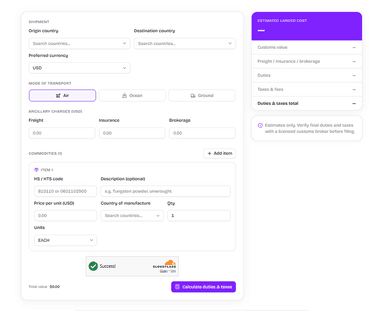
Try the free duty & tax calculator
Estimate what your customers would actually owe in FedEx duty and tax before you ship.
Calculate duty & tax nowFrequently Asked Questions
Does FedEx charge for customs clearance?
Yes — on top of the duty and tax that customs assesses, FedEx charges its own fees for clearing the shipment: a brokerage fee that typically runs $5 to $15, plus an advancement fee (ADV) of about 2% to 5% of the duties and taxes it pays on your behalf. Both appear on the FedEx duty and tax bill alongside the government charges.
How do I pay FedEx duty and tax?
Open the payment notification FedEx sends by email or SMS and pay by card on the FedEx duty and tax payment page using your tracking number. You can also pay the driver at the door when the package arrives, and FedEx's online tools let you view and pay charges without a FedEx account. If the shipper sent the package DDP, everything is already prepaid and there's nothing to pay.
Will FedEx text me about duties and taxes?
FedEx does notify recipients by email or SMS about pending duties, but legitimate payment links always come from fedex.com domains. Scammers impersonate FedEx with texts like "your duties, taxes and fees are due" that link to fake payment pages — verify the sender before you click anything. Real FedEx never asks you to text back a full card number.
What happens if I don't pay FedEx duty and tax?
FedEx holds the package and returns it to the sender after a set period, and the shipper may be billed for the return shipping plus any duties already incurred. Ignoring the bill doesn't make the charge disappear, so if you believe it's wrong, dispute it rather than refusing to pay.
How do I dispute a FedEx duty charge?
Start by comparing the HS code FedEx used against the correct classification for your product, then contact FedEx with your airway bill number and supporting documents — in the US, email dutytaxdisputes@fedex.com, FedEx's official duty and tax dispute address. Non-US customers should go through FedEx customer service in their country. Act quickly: most countries impose dispute time limits of 90 to 180 days.
Can I avoid FedEx import fees?
You can't avoid the duty and VAT themselves — those are government charges — but you can avoid paying them at delivery by having the seller ship DDP (Delivered Duty Paid), so everything is settled at checkout. Checking the HS code before shipping also prevents overclassification, one of the most common causes of inflated bills.
Related guides: UPS Import Charges · DHL Import Duty · FedEx Duty & Tax: How to Pay + Scam Text Warning
DDP shipping eliminates surprise FedEx charges by showing the full landed cost at checkout. Start your 14-day free trial to offer transparent pricing to your international customers.
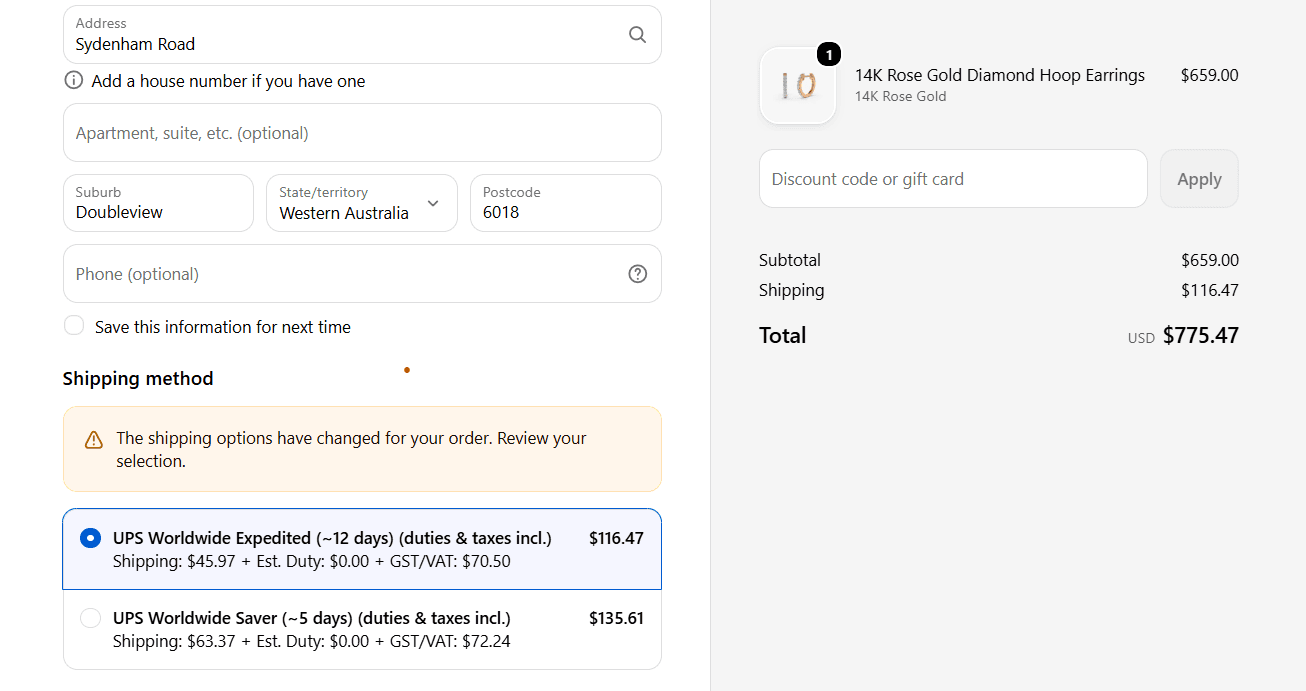
Show duties & taxes at checkout on Shopify
Selling internationally? Prepay duties and taxes at checkout so your customers never get a surprise FedEx bill.
Install on ShopifyRateTell Team
RateTell helps Shopify merchants show estimated duties, taxes, and shipping at checkout. Start your 14-day free trial today.
Start Free TrialRelated articles
Carriers
UPS Import Charges: How Much & How to Pay [2026]
UPS import charges explained — how much UPS charges for customs clearance and brokerage, who pays, and how to pay UPS duties and taxes online.
Carriers
DHL Import Duty: Who Pays, How to Pay & Fees Explained [2026]
DHL import duty explained: who pays, how DHL calculates customs charges, brokerage and advancement fees, and how to pay or dispute DHL duty bills.
Carriers
How to Pay DHL Import Duty & Taxes: Step-by-Step [2026]
How to pay DHL import duty: online via DHL's payment portal, at delivery (COD), or prepaid with DDP. Step-by-step instructions plus dispute tips.